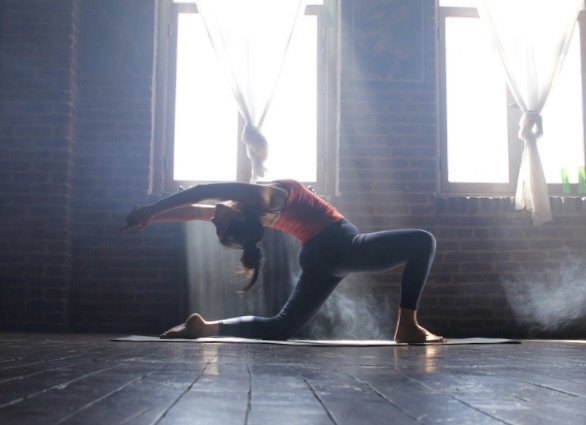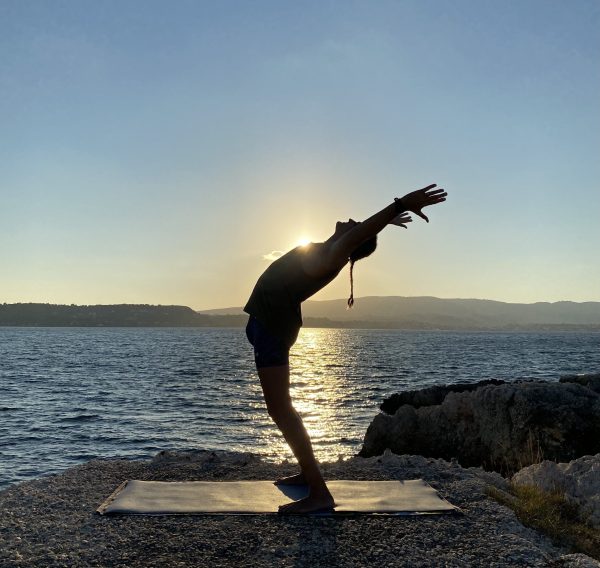
Yoga is incredibly healing. It is a source of peace and tranquility for many, offering us an opportunity to better know our bodies and minds. It teaches patience, balance, and self-reflection. And it can be a vital tool for those healing from trauma.
What Is Trauma?
Trauma is an imprint left on us as a response to overwhelming events that we cannot cope with. It affects both body and mind and can disrupt our daily functioning in many ways by dysregulating our nervous system. Our nervous system balances between two systems: the sympathetic and parasympathetic nervous systems. Each play a vital role, with the sympathetic responsible for stress and strenuous activity, and the parasympathetic responsible for rest, digestion, and relaxation. Both are autonomic, meaning they occur without conscious thought or effort.
When we experience trauma, this balance is disrupted.
In times of stress or threat, the sympathetic nervous system mobilizes the body for survival through fight or flight by releasing hormones (like adrenaline). This increases arousal, heart rate, blood pressure, muscle tension, and reaction speed. These stress responses are meant to give short bursts of energy to escape or confront perceived threats.
When escape is impossible, the parasympathetic nervous system dominates. Where in safety the parasympathetic nervous system allows us to rest and digest, in danger it immobilizes us. If the sympathetic nervous system is getting away from the threat, the parasympathetic nervous is about getting through the threat.
The difference between these two states reflects the differences between hyperarousal and hypoarousal. In hyperarousal we see rapid heartbeat, sweating, trembling, muscle tension, exaggerated jumpiness, and shallow, rapid breathing. In hypoarousal our heart rate and blood pressure drop, faintness, low energy, fatigue, and slow, shallow, and irregular breathing occur.
Again, these physical responses are autonomic. We have no conscious control over them. Our body responds and takes our minds and emotions along for the ride.
Trauma & Breathing
Where stress can impact our body in the short-term, trauma has long lasting and far reaching impacts on both body and mind. When we are traumatized, our body remains stuck in this imbalance, impacting our physical and mental health. And this is seen in our breath.
By focusing on the breath we can begin to bring ourselves back into balance. This is not just yogic philosophy; it is also backed by science. Multiple studies show that breathing is a bridge between our attention, body, emotions, and nervous system.
These practices should be done regularly to gain the benefits. Improvement only comes from regular practice, and with regular practice, ease and comfort with these breathing techniques only grow. As we develop ease and comfort with these practices they become more accessible in times of stress, when we need them most.
Ideally, these should be learned from an experienced teacher that is well versed in these practices. I encourage everyone reading to reach out to teachers in your communities for guidance, tips, or help on these breathing techniques.
Where To Start:
Diaphragmatic Breathing
Diaphragmatic breathing is how we should be breathing all the time. It is how our respiratory system was designed to function. Just watch a baby or pet sleeping and you will see diaphragmatic breathing in action.
Placing our hand on our belly, we focus on making our belly rise as we inhale, feeling the belly fall as we exhale. The movement of the belly is created by the diaphragm as it moves downward on inhale and upward on exhale.
3 Part Breath
This helps people learn Diaphragmatic Breathing as it slows the breath down, and the visualization allows the breath to become more meditative.
With one hand on belly, the other on chest. Inhale into belly, feeling it rise, then the ribs, and finally the chest. Exhale from chest, then ribs, then belly.
It helps to visualize the lungs filling as we would fill a pitcher with water, from the bottom to the top, and emptying from the top to the bottom.
Hyperarousal Practices
Hyperarousal practices are those for when our sympathetic nervous system dominates, as seen in fight or flight responses. These help activate the parasympathetic nervous system, and bring a sense of calm and relaxation.
Ujjayi
This is a slow breathing practice where the glottis (back of the throat) is slightly constricted to create a breath that sounds like Darth Vadar. The constriction forces the breath to slow down, limiting rapid breathing.
Ujjayi also activates the vagus nerve in the neck, activating the parasympathetic nervous system and reducing stress and anxiety.
Hypoarousal Practices
Hyparousal practices are those for when our parasympathetic nervous system dominates, as seen in dissociative responses like freezing, fainting, or mentally checking out. These bring the parasympathetic nervous system into balance, where we can be more present
Kapalabhati
Kapalabhati is often considered an advanced breathing practice, and better suited to those with more experience in breathing practices. I highly recommend learning this breathing technique from an experience teacher, moving slowly, and easing into this practice. That said, it is my favorite breathing practice, and is a very large part of my personal practice and has been instrumental in much of my own healing.
The goal of kapalabhati is to make the inhalation passive and the exhalation active – the opposite of our natural breathing. This turns our breathing from an autonomic process into a voluntary practice. Basically, it puts our conscious mind very much in control.
Initially, kapalabhati is highly stimulating, activating the sympathetic nervous system. However, when the breathing practice is stopped, the parasympathetic nervous system becomes activated. For this reason, it should only be used for
for those of us with hypoarousal.
We begin by exhaling completely, and then begin exhaling quickly with short and forceful exhalations. With every exhalation we pull the belly in towards the spine strongly. We repeat this several times and then stop allowing the breath to revert to normal.
Eventually, the inhalation becomes passive and occurs between exhalations.
This is considered in yogic philosophy one extended breath. And, with practice, it can feel like an unending exhalation. This and the pumping of the abdomen which activates the vagus nerve in the abdomen, which can activate the parasympathetic nervous system.
Best Practice For Hypo and Hyperarousal
So Hum Meditation
This is one of my favorite practices. It also engages both sides of the body simultaneously, and it is suitable for everyone at any level. We simply inhale and exhale, mentally repeating the syllables of the mantra with each breath. With every inhalation we slowly close the hands into fists, with every exhalation we slowly open the fists.
By using both hands symmetrically and simultaneously, we allow ourselves to feel our body as a cohesive whole, and less fragmented, as in trauma we may experience the self as parts. This also helps us stay grounded and in the present moment, which helps us maintain a healthy distance from the trauma in the past.
Sit comfortably with palms facing upward. Alternate inhalation and exhalation with each syllable (starting with an inhalation at So). Inhale hands into fists, exhale hands open.
So Hum Hum Sa
Hum Sa So Hum
So Hum Hum Sa
Hum Ha So Hum
While we cannot erase our trauma by breathing it away, breath work can help bring us back to ourselves and into the present moment. Through a steady practice built on self compassion, we can begin to regulate our nervous system, as well as our emotions, finding peace and safety where we are. Healing is not about forcing calm or controlling our every response. It is about learning, slowly and patiently, that we can find a place of refuge again, in ourselves.




 by
by 


 by
by