When I wrote Undesking: Yoga for Working Life back in 2018, I’d been watching the same bodies walk into yoga spaces for years. So many had the tight psoas, sore backs, duck feet, and tech neck that seemed to be getting more common. The research was there to support what I was seeing, but a lot of it was still intuition mixed with what I’d learned about anatomy.
A lot has happened since then. A global pandemic sent most of the working world home, where they proceeded to sit in even worse chairs for even longer hours. Ultrasound technology got precise enough to actually measure how stiff your psoas is. And the clinical picture of what a tight psoas does to the rest of your body has gotten considerably clearer — and considerably more interesting.
Here’s what we know now that we didn’t fully understand back then.
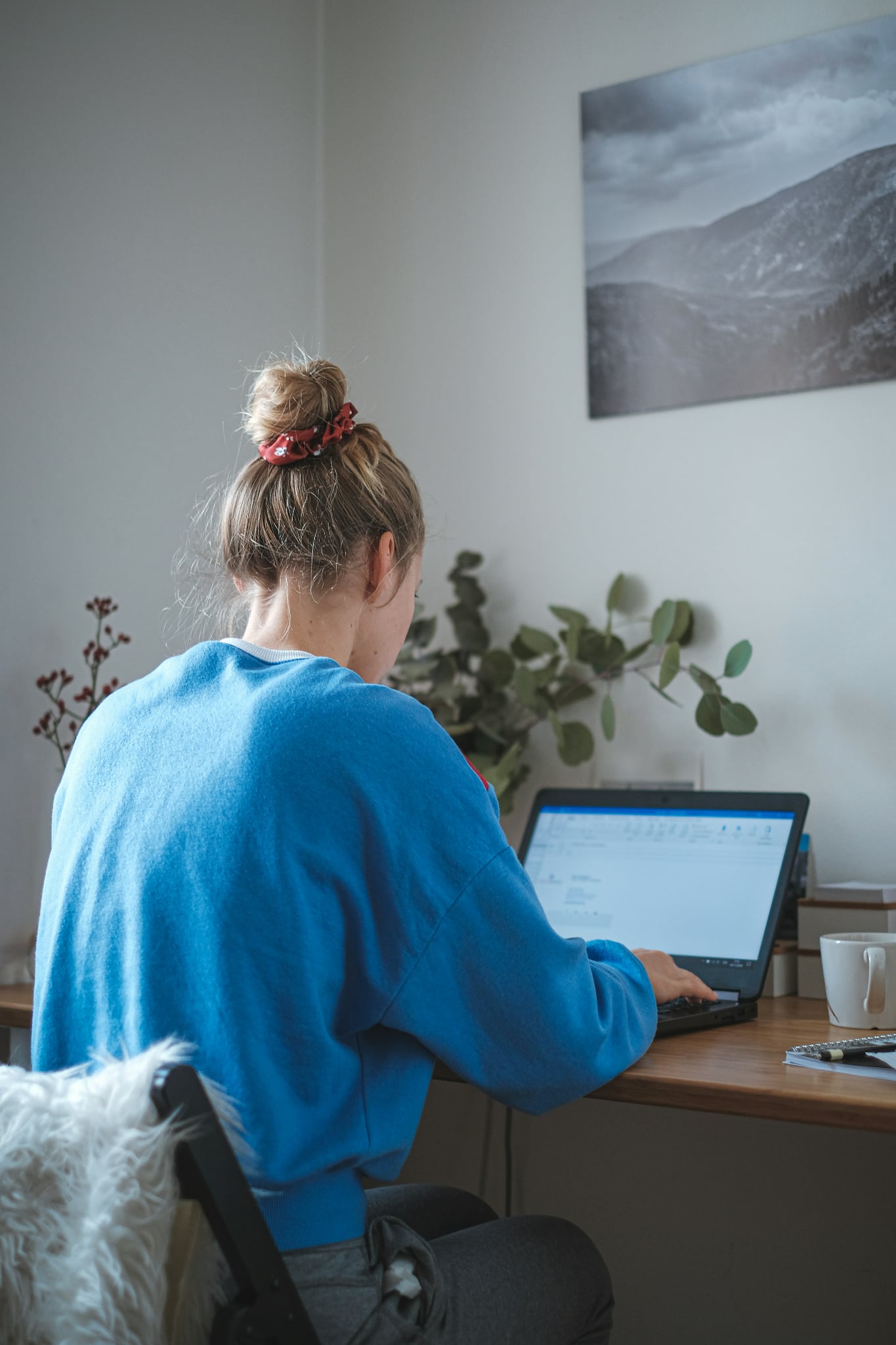
The Problem Only Got Worse. In 2018, I was writing about office workers. By spring of 2020, the office had moved into the kitchen, bedroom, and living room couch without the ergonomics, or even the commute that forced people to at least walk to their cars. It also came without the social pressure to leave your desk at lunchtime.
Remote work didn’t create new problems so much as it supercharged old ones. The same psoas that was shortening over eight hours in an office chair was now shortening over ten or twelve, often in a dining chair that was never designed for a full workday. The “killer chairs” that Dr. James Levine at the Mayo Clinic warned about got a lot more screen time.
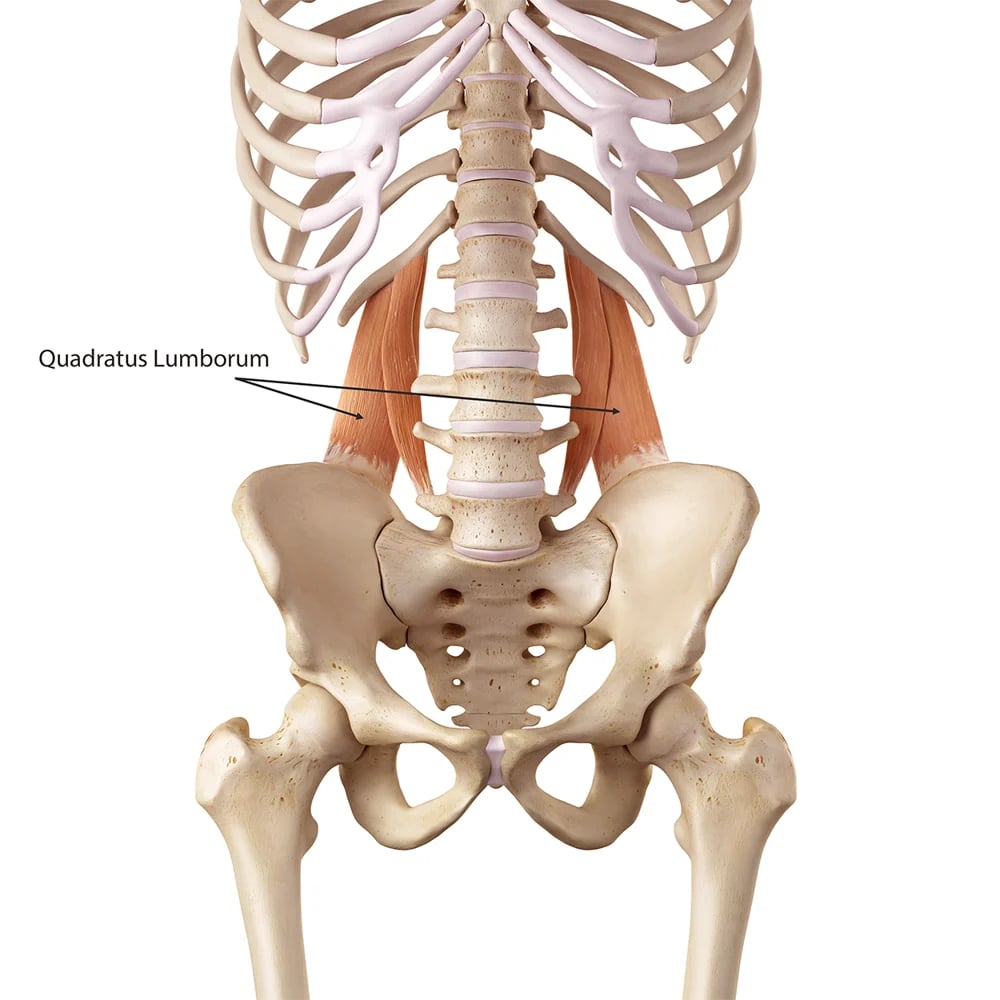
We Can Now Measure Muscle Stiffness. One of the most significant developments since the original article is that researchers can now quantify psoas and quadratus lumborum stiffness directly, using a technique called ultrasound shear wave elastography. In other words, they can point a device at your lower back and get a reliable reading on how stiff those muscles are.
The research confirms what most yoga teachers already knew; that sedentary behavior stiffens both the psoas and the quadratus lumborum (QL), and that stiffness is directly associated with lower back pain.
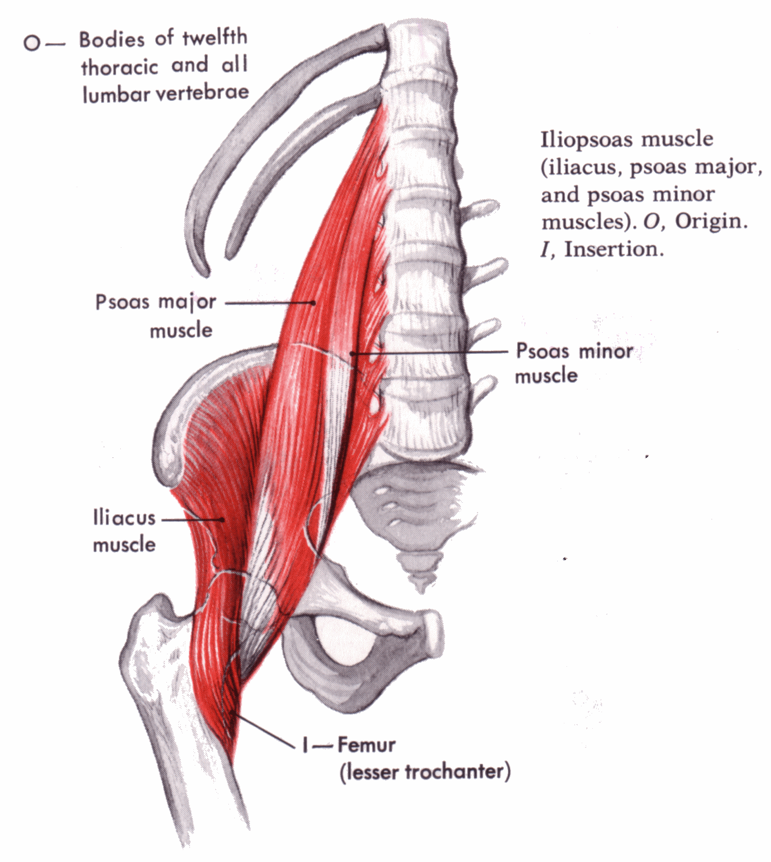 The Chain Reaction Is Clearer Than Ever. In the original piece, I described the psoas and QL as two sides of a tug-of-war, with the psoas winning and leaving the outmatched QL sore if not in spasm. But what’s come into much sharper focus since then is everything that happens downstream when the psoas shortens. What we know now is the chain is longer and more consequential than most people realize.
It starts with the pelvis. A tight psoas pulls the lumbar vertebrae into a deeper lordotic curve and tips the pelvis into an anterior tilt — think of the classic swayback posture you see walking down any city street. The QL on the back side has to work overtime to compensate. Over time, it loses the battle to the psoas and goes into spasm.
 Then it reaches the hamstrings. Here’s where things get genuinely interesting, and where the picture has gotten much clearer since 2018. When the pelvis tips forward, the sit bones rotate upward. The hamstrings (which attach at the sit bones) get pulled taut. They feel tight so every instinct tells you to stretch them.
But what the research increasingly suggests is that this sensation of tightness doesn’t always mean the hamstrings are short. In anterior (forward) pelvic tilt, they may actually be lengthened and under passive strain. This finding indicates that we should avoid aggressively stretching an already over-lengthened muscle. The more complete picture is that the pelvis is held in place by a team consisting of the hamstrings, gluteus maximus, abdominals, and hip flexors that all play a role in keeping it in neutral alignment. When the psoas tips the balance, the whole team is thrown off, not just the hamstrings.
This means that chasing hamstring flexibility alone is unlikely to resolve the problem. Restoring pelvic balance requires addressing the root cause; a shortened psoas, while also progressively restrengthening the posterior muscle chain, especially the glutes since they are the primary movers responsible for drawing the pelvis back toward neutral.
The nervous system is in on this too. In the original piece I touched on the psoas as a muscle of survival which automatically engages every time the fight-or-flight response fires. What practitioners and somatic researchers increasingly suggest is that the relationship may be bidirectional. A chronically tight psoas doesn’t just reflect a stressed nervous system, it may actively help to keep it in that state. The tension feeds back into the system, keeping the body in a low-grade state of readiness that never fully resolves. The clinical evidence here is still catching up with what somatic educators like Liz Koch have been observing for decades, but the emerging picture is compelling. So for many people, releasing the psoas may be as much a nervous system intervention as a muscular one.
“Sitting Is the New Smoking” – But With a Twist. When I included Dr. Levine’s phrase in the original article, it had already gone viral in health and wellness circles. The years since then have added some helpful nuance. It’s not just how much you sit but how unbroken the sitting is.
Research has consistently shown that interrupting prolonged sitting with even brief movement changes the metabolic and musculoskeletal picture significantly. Five minutes of walking every half hour isn’t a luxury. For a body designed to be active most of the day, it’s closer to a minimum.
The message for people who must sit all day isn’t just do yoga in the evenings. It’s to take frequent movement breaks all day long and then go to yoga in the evening. One doesn’t substitute for the other.
Releasing the Psoas Starts a Very Positive Chain Reaction. When the psoas genuinely releases and lengthens, the downstream effects are remarkable. The pelvis returns to a healthier position. The QL is no longer fighting a losing battle, so it can finally relax. The hamstrings decompress, not because you stretched them, but because the pelvic position that was pulling them taut has changed. The lumbar lordosis softens, reducing compression on your discs. The femurs stop rotating outward, so the duck-footed gait begins to correct, easing stress on the knees and ankles. And the nervous system, no longer anchored in a chronically braced in a “ready for action” state, gets the signal that it’s safe to relax.
This is why the focus of Undesking has always been to start with the psoas. In fact, with any new yoga student the first thing I observe is how their posture may be affected by a tight psoas. In modern life, that means most people. Of course, other aspects of posture matter too but the psoas is a structural keystone. It bridges the lumbar spine and the femur, connecting the upper and lower body through the center of the pelvis. Almost nothing downstream of it can fully resolve so long as it remains shortened and in a constant state of tension.
What This Means for Your Practice. If you’ve been doing yoga for lower back pain and not getting the results you hoped for, ask yourself whether your practice is targeting the psoas, or working around it. Forward folds and seated hamstring stretches can feel productive, but they don’t put the psoas in the position it needs to be in to lengthen.
The poses that do that work most reliably create deep hip extension in the back leg to open the targeted area. A well-taught Warrior I (Virabhadrasana I) is a solid entry point when the alignment is precise with hips squared to the front, heart lifting, the outer edge of the back foot and heel pressing firmly down, and arms lifting to create traction through the entire front line. Done correctly, Warrior I doesn’t just stretch the psoas of the back leg, it’s also strengthening the psoas of the front leg, making it one of the most complete psoas poses in a standing practice. The critical word is correctly. A collapsed lumbar or hips that are not pointing forward will fail to reach the psoas.
One way to ensure the hips can face forward is to widen the stance left-right on the mat. The easiest way to do this is to have the outer edge of the front foot almost touching the outer edge of the mat and the read foot doing the same on the opposite side. This exaggerated stance may not be how you learned the pose in yoga teacher training, but I’ve found it’s the best way to get an entire room of people on the same page to open their psoas in Virabhadrasana I.
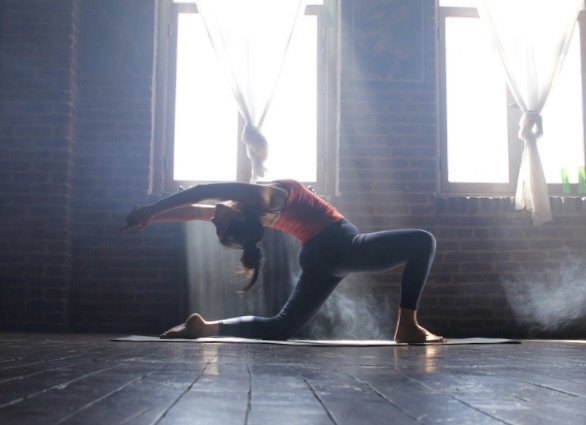
For those ready to go further, Kapyasana the Monkey Pose, is arguably the most effective psoas asana in the practice. When done correctly, this combination of deep hip extension and posterior (rearward) arch produces a profound opening of the psoas itself. It provides not only a lengthening of the surrounding hip flexor complex, but a direct release of the psoas on a deep level. When done correctly, its intense and uncomfortable, but the results come fast when the student is patient and consistent. To see how to do it safely and effectively, check out Maya Devi Georg’s video on kapyasana here.
If you feel or have been told your hamstrings are tight, consider the possibility the tightness you’re feeling is a symptom of your pelvic position, not a flexibility issue. Stretching a muscle that’s already under passive tension is working against the problem, not with it.
And if you sit for a living in front of a screen, in a car, or on a plane, understand that no amount of evening yoga fully undoes a day of unbroken sitting. Move throughout the day and set a timer if you must, because your psoas is keeping score.
It would also be remiss not to give the QL some loving attention of its own, especially in the early phases of psoas release when back pain is first beginning to ease. The QL has been working overtime for a long time, and as the psoas softens and the tug-of-war begins to resolve, the QL needs gentle encouragement to let go as well.
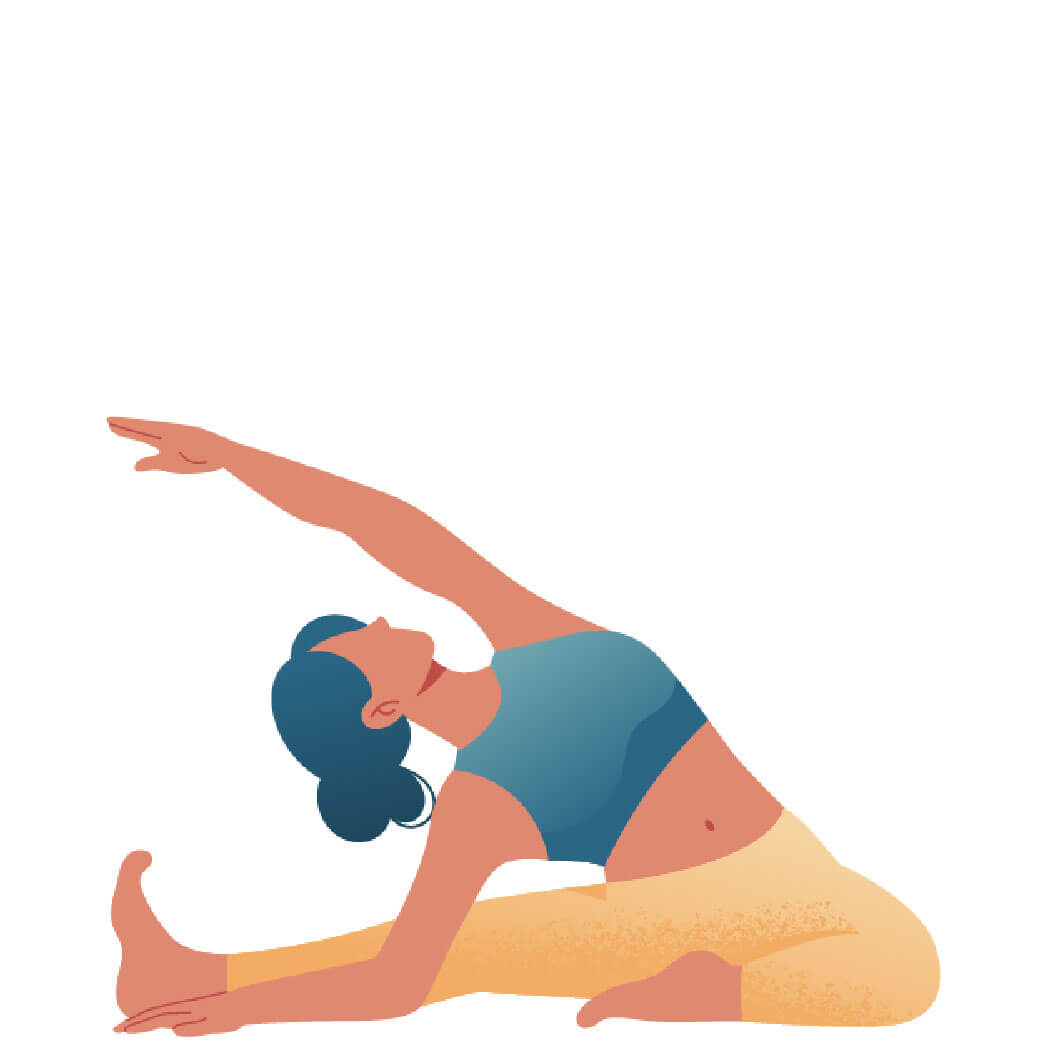 A good Parivrtta Janu Sirsasana (Revolved Head-to-Knee Pose) is one of the most direct and satisfying QL releases in the seated practice. Bending laterally over the extended leg, with the arm reaching long overhead in the direction of the foot, creates a gentle but clear traction along the entire side body from hip to rib. The trick here is not to try to reach the foot but to make that reach move upward too. So you’re not just reaching out toward the foot – keeping heart turning upward, the pinky finger high and the elbow tracking behind the ear, almost as if practicing ballet. Instead of trying to reach across, you’re reaching that pinky finger to the place where the wall and ceiling meet.
The QL lengthens beautifully in this position in a way that almost nothing else in a seated practice can match.
 The good news is that our body is astonishingly responsive when we give it what it needs. A psoas that has been shortening for years can begin to release in days and weeks. Students who’ve lived with chronic lower back pain often notice a shift after just a few well-taught sessions. The pelvis finds its way back toward neutral, the back softens and our breath finds its way deeper into the belly. When your whole body is finally given a little room, it begins to remember what it felt like before the desk, the commute, or the screen claimed so waking hours. Undesking has always been about returning to something our body already knows how to do.
You’re not broken, just a little compressed. And we can change that with yoga.
If you have any medical concerns, check with your doctor before beginning a yoga practice, and inform your teacher of any health issues.




 by
by 


 by
by